
Why Your Church Website Needs the Right Foundation
Your website is often the very first touchpoint someone has with your church. Before they walk into the building, before they hear a sermon, before they meet a pastor—your website shapes their expectations. It tells them who you are, what you value, and whether your church feels like a place where they can belong.
But many ministries struggle with websites that feel outdated or are difficult to update. Slow pages, confusing layouts, inaccurate information, or non-mobile designs can unintentionally push people away. In a season when families rely on digital first impressions, these barriers matter more than ever.
Your team already carries the weight of shepherding people, planning events, discipling leaders, and caring for your community. Your website should lighten those responsibilities, not make them heavier. And as digital expectations continue to rise in 2026, churches need simple, reliable tools that help them communicate clearly and consistently.
The encouraging news is this: you don’t need to be a designer or developer to have a strong online presence. You just need a website builder with the right features—tools designed specifically for ministry, not corporate websites or generic templates.
Below, you’ll find the key church website builder features every church should prioritize in 2026. These features will help your website serve guests well, support your ministry goals, and give your team confidence as they update and share important information.
1. Make Sure Your Website Is Fully Mobile-First
More than 60% of visitors will experience your website from a phone. That means your church doesn’t just need a website that “works” on mobile—it needs a mobile-first church website built intentionally for small screens.
A fully mobile-first experience ensures:
- Large, easy-to-tap buttons
- Clean layouts that adjust automatically
- Readable text without pinching or zooming
- Quick access to service times, giving, and event details
This isn’t just a tech requirement—it’s hospitality. It helps busy families look up service times while parked in the car. It helps new guests find directions quickly. It helps members sign up for events in seconds. And when people can interact with your church easily during the week, your website becomes a ministry partner, not a roadblock.
ChurchSpring’s Church Website Builder automatically optimizes every layout for mobile, giving your church a seamless experience across every device.
“I appreciate the effort ChurchSpring has put into creating a platform that simplifies website management for ministries. The user-friendly interface and helpful features make it easy to build and maintain an engaging online presence.”
Manatha Y., Fruitful Living
2. Use Image-Rich Pages That Tell Your Ministry’s Story
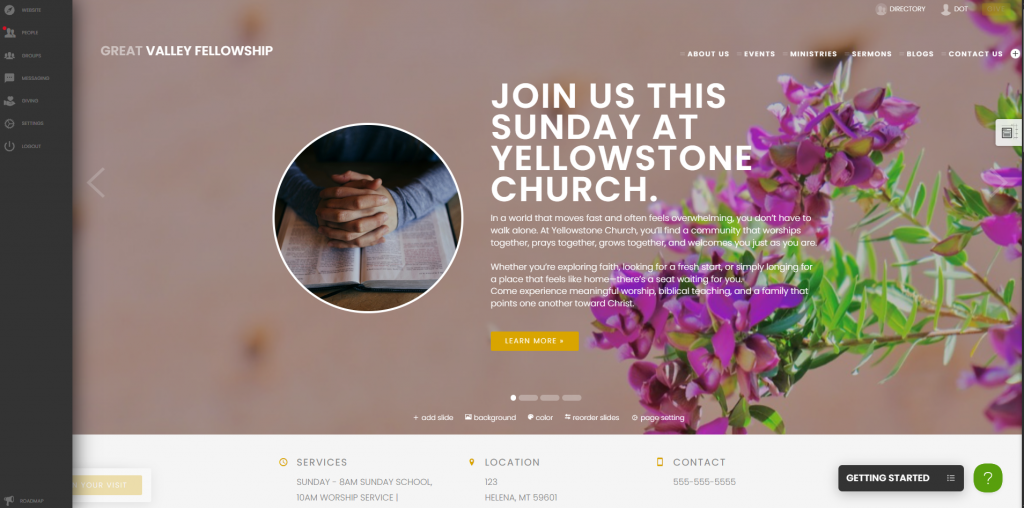
Your website should feel alive with the people God has entrusted to you. A strong builder will help you create an image-rich church website that shows real faces, real moments, and real ministry—not generic stock photos.
High-quality visual tools help you:
- Post authentic ministry photos
- Build warm and welcoming pages
- Highlight events, groups, and stories
- Help guests see themselves as part of your church family
When someone visits your website and sees genuine connection—joyful worship, serving teams, children’s ministry moments—they immediately sense the culture of your church. Photos build trust long before words do.
Your church website builder should make uploading and arranging images simple, so your team can keep visuals updated without advanced design skills.
3. Offer Clear and Simple Online Giving Tools
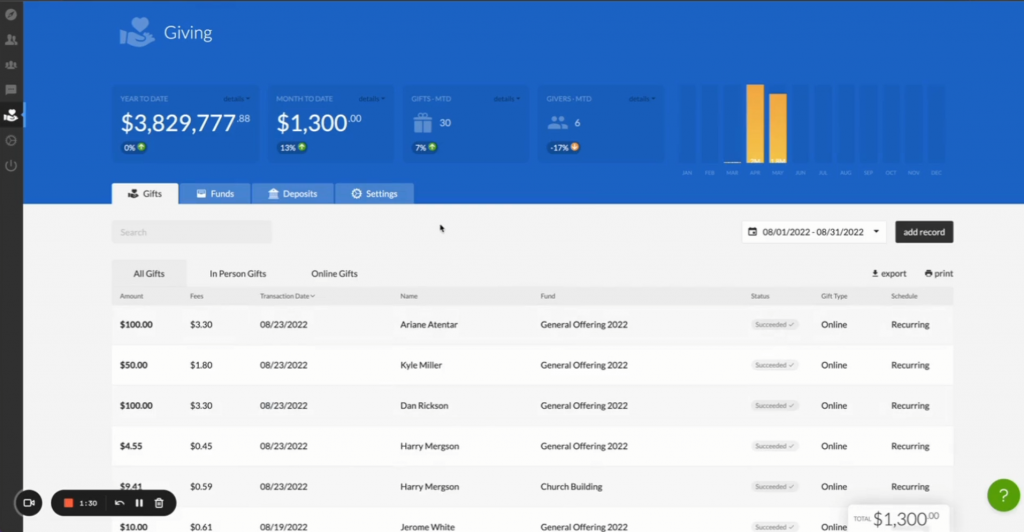
Digital giving is now a primary way people support their church. Your website builder should make it easy to increase giving through your church website with clear, secure, mobile-friendly giving tools.
Look for features like:
- Multiple fund options (missions, youth, benevolence)
- Seamless recurring giving
- One-tap mobile giving
- Giving dashboards for administrators
When giving is simple, people engage more consistently. And when they can give from anywhere—during travel, from a livestream, or midweek—you strengthen generosity rhythms without added pressure.
ChurchSpring’s free Giving platform includes built-in giving tools that allow members to give faithfully and confidently.
4. Prioritize Easy Editing Tools for Busy Teams
Your website should be something your staff and volunteers enjoy updating—not something they dread. In 2026, user-friendly editing is no longer optional. Churches need tools that help them update content in minutes.
Easy editing tools allow your team to:
- Swap homepage banners quickly
- Update event pages in real time
- Add sermons with minimal steps
- Refresh photos and text without training
If your team avoids updating your website because it feels difficult, it may be time to consider moving to a new church website. Ministry moves fast—your website builder should move with you.
The strongest builders provide “click-to-edit” simplicity so your team stays confident and your website stays fresh.
5. Include Strong SEO Tools to Increase Visibility
People can only visit your church if they can find your church. Effective search engine optimization (SEO) tools are one of the top features every church website builder must have, because they help your ministry show up when someone searches online.
Your CHURCH website builder should make SEO tweaks for church website pages simple with tools like:
- Editable or automatically created meta descriptions
- Custom URL slugs
- Clear header structure (H1, H2, H3)
- Alt text for images
- Optimized page titles
Here’s how to use these tools effectively:
- Add your city or region to key pages (e.g., “Family Church in Springfield”).
- Use clear, descriptive titles rather than clever ones.
- Write meta descriptions that explain exactly what’s on the page.
- Add alt text that describes your images accurately.
- Keep URLs short and easy to read.
SEO isn’t about chasing algorithms. It’s about helping real people in your community find a church home, discover resources, and take their next spiritual step.
6. Build Dedicated Event and Ministry Pages
Every event and ministry deserves a clear, well-organized place on your website. A strong church website builder makes this easy by offering templates that keep details accessible and up to date.
Dedicated pages help you:
- Highlight key ministries (kids, youth, groups)
- Share event details and registration links
- Add volunteer sign-up forms
- Embed maps, photos, and next steps
If you’re redesigning your church website, prioritize church website builders that allow you to create these pages quickly without needing to build complex layouts from scratch.
7. Support Sermon Media and Live Streaming Embeds
Your sermons matter—people revisit them throughout the week for encouragement, clarity, and spiritual growth. A strong church website builder should make it easy to host and organize your sermon content so your church family can return to it anytime. This is true for those who missed a Sunday, those exploring faith for the first time, and long-time believers who want to dive deeper into teaching.
Your church website builder should support:
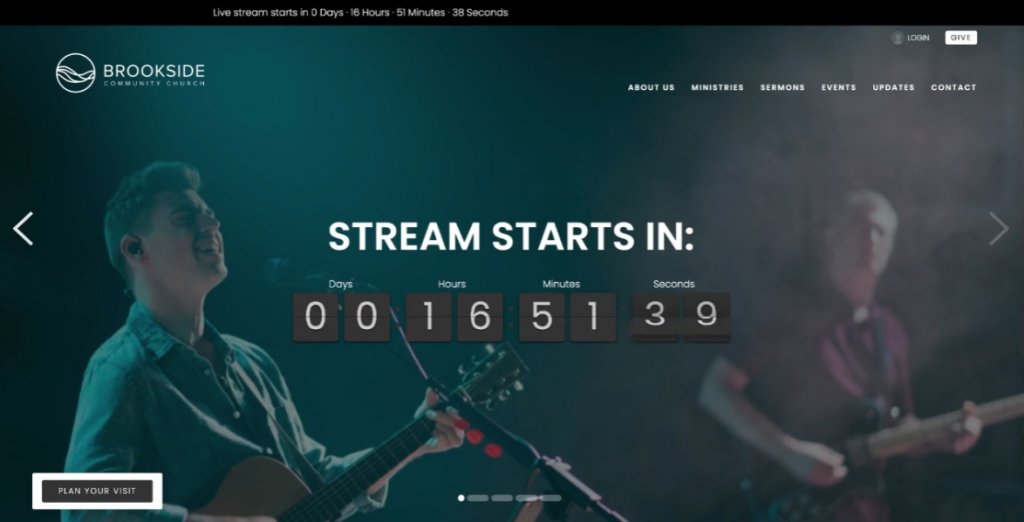
- Livestream embedding for Sunday services and special events
- Audio and video uploads for easy midweek access
- Playlist-style organization to help people binge past messages
- Series-based sermon pages that group teachings in a meaningful way
When your sermon library is easy to browse, members can grow in their discipleship throughout the week—not just on Sundays. A well-organized media section also gives new guests a glimpse into your teaching style and theological clarity, helping them feel more confident about visiting in person.
Here are a few practical tips for maximizing your sermon media:
- Add short descriptions or key takeaways below each sermon to guide listeners.
- Organize sermons by series, date, or speaker to make navigation intuitive.
- Include Scripture references to support deeper study.
- Feature your most recent sermon on the homepage for quick access.
A church website builder that handles sermon media well turns your website into a long-term discipleship resource, giving people spiritual support and encouragement whenever they need it.
Your church website builder should also make live streaming simple and reliable, helping your team focus on ministry instead of managing tech. With ChurchSpring’s Live Streaming Features, you can enjoy automatic event reminders through built-in countdown sliders, start streaming quickly with an easy scheduler, and save valuable time using integrated communication tools that create landing pages, set countdown clocks, and activate streams without any IT help—turning your website into a dependable discipleship resource throughout the week.
8. Use a Church Website Builder That Saves You Time Every Week
A great church website builder does more than offer features—it gives your team time back. Ministry is full and often unpredictable, and your website should help you work smarter, not harder.
The right platform reduces workload by:
- Streamlining weekly updates
- Syncing information across pages
- Simplifying content management
- Minimizing repetitive tasks
If your website feels like one more thing to manage, it may be time to consider moving to a new church website that supports your ministry rhythms.
A time-saving builder helps your staff stay organized, communicate clearly, and focus on people—not software.
Final Website Checklist: What to Look For in 2026
Use this checklist to quickly evaluate your current website or compare builders:
- Mobile-first layouts that work beautifully on phones, tablets, and desktops
- Simple tools to create image-rich church websites that feel warm and authentic
- Built-in giving options to increase giving through your church website with secure, recurring donations
- Easy, click-to-edit tools so staff and volunteers can update content without coding
- Clear tools for SEO tweaks for church website pages (titles, descriptions, URLs, and alt text)
- Clean templates for event pages, ministry pages, and volunteer sign-ups
- Strong sermon media support for audio, video, and live streaming embeds
- Reliable performance and support so you’re not stuck troubleshooting every week
When you see these key church website builder features working together, you know your builder is helping your church—not holding it back.
Bringing Your Website Strategy Together
Your website is more than a digital bulletin—it’s a living extension of your ministry. It welcomes first-time guests long before they visit in person. It keeps members connected throughout the week. And it creates space for people to explore, learn, give, and grow at their own pace. When you invest in the right church website builder, you’re investing in clarity, hospitality, and long-term ministry impact.
A strong church website builder not only simplifies tasks—it strengthens communication. It helps your team work with confidence, reduces the stress of constant updates, and removes the frustration of outdated or complicated tools. When technology supports you rather than slows you down, your staff and volunteers gain back hours each month to focus on what matters most: discipling people, serving your community, and sharing the hope of Christ.
The right church website builder also grows with your church. As your ministries expand, as events multiply, and as your digital needs increase, your website should stay steady—flexible, reliable, and easy to maintain. Whether you’re planning seasonal outreach, uploading sermons, supporting online giving, or updating your homepage, your website should consistently reflect excellence and care.
With a ministry-focused website tool like ChurchSpring’s Church Website Builder, you can:
- Launch a mobile-first church website that looks great on every device
- Keep content updated quickly with simple, intuitive editing tools
- Highlight sermons, events, and ministries in a way that serves real people
- Support generosity and engagement through integrated giving and media tools
If you’re ready to move beyond the limitations of your current tools or you’re considering redesigning your church website, this is a great time to take the next step.
“ChurchSpring has been one of those rare products that performs as advertised. One of the top reasons we chose ChurchSpring was for ease of editing and updating the website. As promised, it has been just that…easy.”
Pastor Karl M., Timberville Church of the Brethren
Try ChurchSpring free for 7 days or join a live demo to see how our builder helps you create a clear, ministry-ready website that truly supports your church’s mission in 2026 and beyond.